Latest Posts

‘PSYCHO’ GOES TO MAESTEG

Trust members recently joined the Maesteg Bluebirds for a question and answer session with Bluebirds legend Jason Perry and the BBC Wales soccer commentator Rob Phillips.

Jason told some cracking stories about the way football used to be – he obviously thinks the players and officials have gone a bit soft these days.

It was a great evening and Graham Keenor, Fred Keenor’s nephew, also came along to tell everyone about the statue appeal. There was considerable interest in the photographs of Fred which Graham brought along to show everyone.

Trust chairman Tim Hartley said: “Congratulations to the Maesteg Bluebirds on celebrating 50 years of organising travel to watch the City and also to the Crown in Maesteg for hosting us. We’ll see you again in 2011.

“I’d also like to thank Jason and Rob for giving up their time. It was appreciated by the 40 or 50 fans that turned up.”

And the evening also raised £300 for the Fred Keenor Statue Appeal. Thanks to everyone that helped.

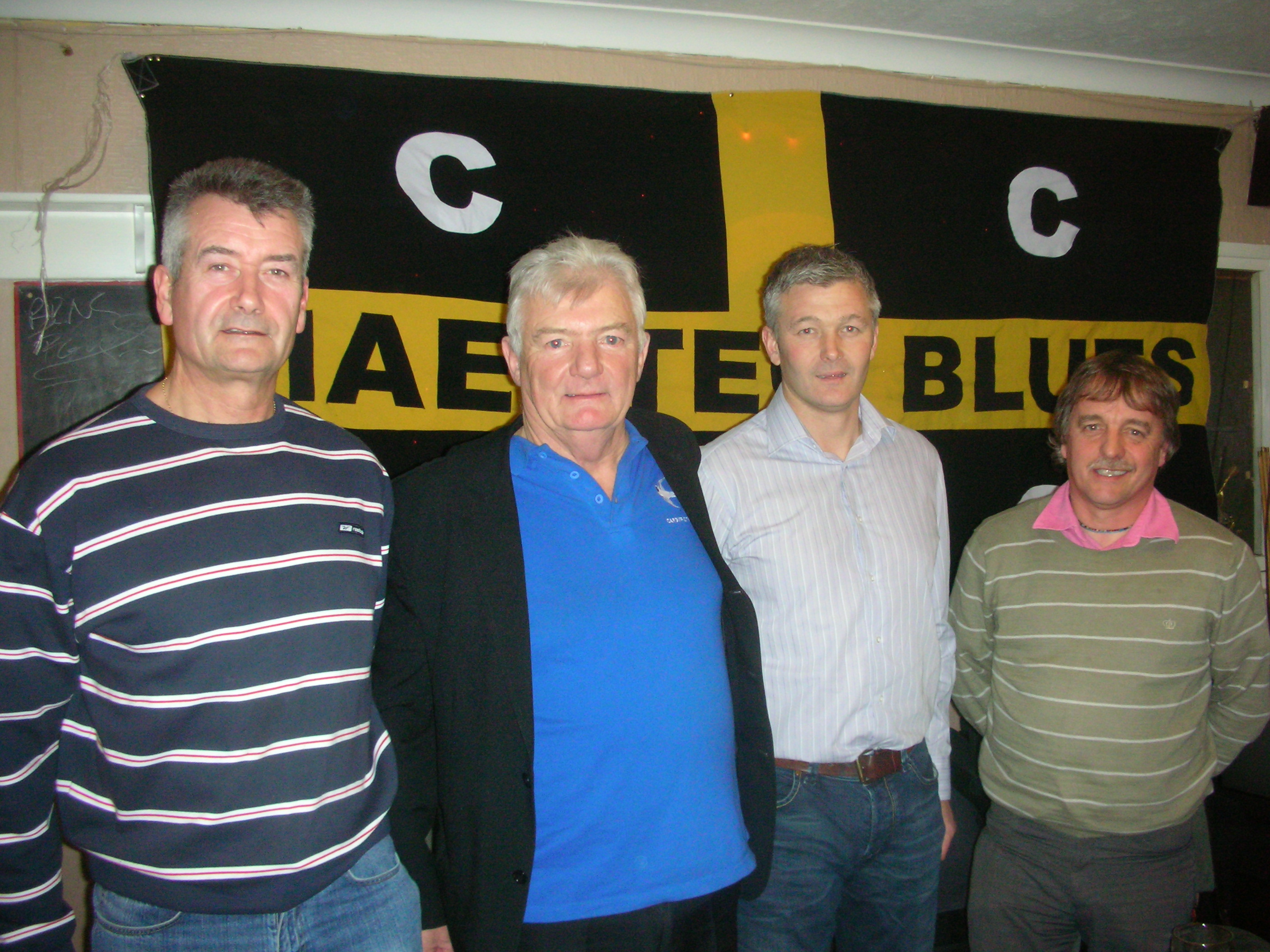
Pictured with Jason Perry and Rob Phillips are Steve Smith and Mel Hughes from the Maesteg Bluebirds.

MARATHON RUNNERS BOOST KEENOR APPEAL

Cardiff City legend Phil Dwyer received a £475 cheque from Matthew Bullock on behalf of the Fred Keenor Statue Appeal.

Matthew from Porthcawl ran the Toronto Marathon while fellow runner Richard Lewis of Cardiff presented a cheque for £170 to David Craig, statue project manager. Richard pounded the streets of Berlin.

The appeal committee would like to thank both Bluebird fans for their fantastic efforts.

David Craig said: “Matthew and Richard and the fans that organised the message board football match have shown a lead and we’d like to see other supporters organise their own events for the appeal. The more that are organised the quicker we’ll raise the funds necessary to create the tribute to Fred.”


FOOTBALL GOVERNANCE

The following Press Release was issued today by the UK Culture, Media and Sport Committee

The Culture, Media and Sport Committee issues a call for evidence on Football Governance

The Culture, Media and Sport Committee is today launching a new inquiry into the governance of professional football clubs responding not only to the high-profile coverage of Liverpool and Manchester United, but also to broader concerns that current and future generations of football supporters of clubs across the country are ill-served by current football club regulations. The coalition agreement includes an undertaking to encourage the reform of football governance rules to support the co-operative ownership of football clubs by supporters, and our inquiry will consider the case for strategic Government intervention in the administration of professional football clubs. In so doing it will look at the scope for enhancing supporter involvement in decision-making processes and consider whether current regulatory processes – including fit and proper persons tests – are adequate. Questions the Committee will consider, include:

·         Should football clubs in the UK be treated differently from other commercial organisations?

·         Are football governance rules in England and Wales, and the governing bodies which set and apply them, fit for purpose?

·         Is there too much debt in the professional game?

·         What are the pros and cons of the Supporter Trust share-holding model?

·         Is Government intervention justified and, if so, what form should it take?

·         Are there lessons to be learned from football governance models across the UK and abroad, and from governance models in other sports?

Committee Chair Mr John Whittingdale said:

“The Government has said that it will encourage the reform of football governance rules to support the co-operative ownership of football clubs by supporters, and there is widespread concern that the current governance arrangements are not fit-for-purpose. Our inquiry will look at the case for strategic Government intervention and improved self-regulation and will consider models which involve supporters more in how clubs are run. We are keen to hear from a wide range of interested parties, including fans, as well as the clubs themselves and their own regulatory bodies.”

The Committee is inviting written submission on the above and other matters relevant to the inquiry. A copy of the submission should be sent by e-mail to cmsev@parliament.uk and have ‘Football Governance’ in the subject line. Submissions should be received by Wednesday 26 January 2011.

Guidance on submitting written evidence

It assists the Committee if those submitting written evidence adhere to the following guidelines:

Each submission should:

•          state clearly who the submission is from, i.e. whether from yourself in a personal capacity or sent on behalf of an organisation

•          be about 3,000 words in length / run to no more than six sides of A4 paper;

•          as far as possible comprise a single document attachment to the email;

•          begin with a short summary in bullet point form;

•          have numbered paragraphs; and

•          be in Word or Rich Text format (not PDF) with as little use of colour or logos as possible.

Please supply a postal address so a copy of the Committee’s report can be sent to you upon publication.

It would be helpful, for Data Protection purposes, if individuals submitting written evidence would send their contact details separately in a covering email in a block of text laid out vertically.

You should also be aware that there may be circumstances in which the House of Commons will be required to communicate information to third parties on request, in order to comply with its obligations under the Freedom of Information Act 2000.

Though there is a strong preference for emailed submissions, those without access to a computer should send a hard copy to:

Committee Assistant

Culture, Media and Sport Committee

Committee Office

House of Commons

7 Millbank

London  SW1P 3JA

A guide for written submissions to Select Committees may be found on the parliamentary website at: https://www.parliament.uk/get-involved/have-your-say/take-part-in-committee-inquiries/witness/

Please also note that:

·         Committees make public much of the evidence they receive during inquiries. If you do not wish your submission to be published, you must clearly say so. If you wish to include private or confidential information in your submission to the Committee, please contact the Clerk of the Committee to discuss this.

·         Material already published elsewhere should not form the basis of a submission, but may be referred to within a proposed submission, in which case a hard copy of the published work should be included.

·         Evidence submitted must be kept confidential until published by the Committee, unless publication by the person or organisation submitting it is specifically authorised.

·         Once submitted, evidence is the property of the Committee. The Committee normally, though not always, chooses to make public the written evidence it receives, by publishing it on the Internet (where it will be searchable), by printing it or by making it available through the Parliamentary Archives. If there is any information you believe to be sensitive you should highlight it and explain what harm you believe would result from its disclosure. The Committee will take this into account in deciding whether to publish or further disclose the evidence.

·         Committees do not normally investigate individual cases of complaint or allegations of maladministration.

·         Once submitted, no public use should be made of any submission prepared specifically for the Committee unless you have first obtained permission from the Clerk of the Committee.

For up-to-date information on progress of the inquiry visit: https://www.parliament.uk/cmscom